Peak Shaving Is Not an Energy Strategy. Here's What Is.
Photo: Chris Allen , CC BY-SA 2.0, via Wikimedia Commons
There is a particular kind of organizational confidence that comes from having a plan. Energy managers who have implemented peak shaving programs — battery storage systems, load curtailment protocols, demand response enrollment — often feel, reasonably, that they are ahead of the curve. They are actively managing their grid relationship. They are reducing demand charges. They have a story to tell the CFO.
This article is not an argument against peak shaving. It is an argument against mistaking it for a complete energy strategy.
The distinction matters because the facilities that are genuinely winning on energy — controlling costs, improving resilience, and advancing sustainability simultaneously — are not the ones with the most sophisticated demand charge management programs. They are the ones that recognized peak shaving as a useful tactic within a much larger framework, and built that framework deliberately.
The Appeal Is Real, But So Are the Limits
It is not difficult to understand why peak shaving has attracted so much attention from industrial energy managers over the past several years. Demand charges — the portion of a commercial or industrial electricity bill calculated on peak consumption during a billing period — can represent 30 to 50 percent of total electricity costs for many US manufacturers. As grid operators have expanded time-of-use rate structures and dynamic pricing programs, the financial stakes of peak consumption have grown.
Battery storage technology has improved substantially and costs have declined. Demand response programs administered by regional transmission organizations and utilities offer direct financial incentives for load curtailment during grid stress events. The return on investment for well-designed peak shaving implementations is often compelling on paper.
But here is the problem: peak shaving is fundamentally reactive. It is a response to price signals from an external party — the utility or grid operator — whose interests are not perfectly aligned with those of the industrial facility. When a facility designs its energy behavior around minimizing demand charges, it is optimizing for a cost metric defined by someone else's rate structure. That rate structure can and does change.
The Hidden Costs of Reactive Grid Management
Facilities that have built operational flexibility primarily around peak shaving often discover a set of second-order consequences that were not apparent when the strategy was designed.
First, there is the operational disruption cost. Load curtailment during peak demand events frequently means reducing production throughput, delaying process steps, or cycling equipment in ways that create wear and inefficiency. For manufacturers operating on tight production schedules or managing just-in-time supply chains, the operational cost of curtailment can exceed the demand charge savings — a trade-off that is rarely modeled with sufficient rigor.
Second, battery storage systems sized primarily for peak shaving often lack the capacity to provide meaningful resilience during extended grid outages. A battery bank optimized to shave two hours of peak demand per day is a very different asset than one designed to maintain critical operations through a multi-hour outage. Facilities that have invested heavily in the former sometimes discover — during a weather event or grid disruption — that they purchased cost management, not resilience.
Third, and perhaps most consequentially for facilities with sustainability commitments, peak shaving does not inherently reduce consumption. It shifts consumption. If the load that was curtailed during peak hours is simply absorbed into off-peak periods when the grid may be running on less clean generation, the net carbon benefit may be minimal or even negative, depending on the regional grid mix and the timing of curtailment events.
The Rate Structure Dependency Problem
There is a structural vulnerability embedded in any energy strategy that depends heavily on a particular rate design. Utilities across the United States are in the midst of ongoing rate reform processes, driven by the integration of distributed energy resources, changing load profiles, and evolving regulatory priorities. Rate structures that make peak shaving highly attractive today may look quite different in five years.
Several utilities have already modified demand charge structures in ways that reduced the financial benefit of battery-based peak shaving for commercial and industrial customers. Others are experimenting with subscription-based capacity charges or moving toward more granular time-of-use pricing that changes the calculus for load shifting. Facilities that have made significant capital commitments based on current rate structures face the risk that those structures will evolve in ways that erode the return on their investment.
This is not an argument for passivity. It is an argument for building energy strategies that are robust across a range of future rate environments — which is precisely what purely reactive, rate-optimization-focused approaches fail to do.
What an Integrated Energy Strategy Actually Looks Like
The facilities that have moved beyond reactive grid management share a common architectural principle: they have built energy systems that generate value across multiple dimensions simultaneously, rather than optimizing for a single metric.
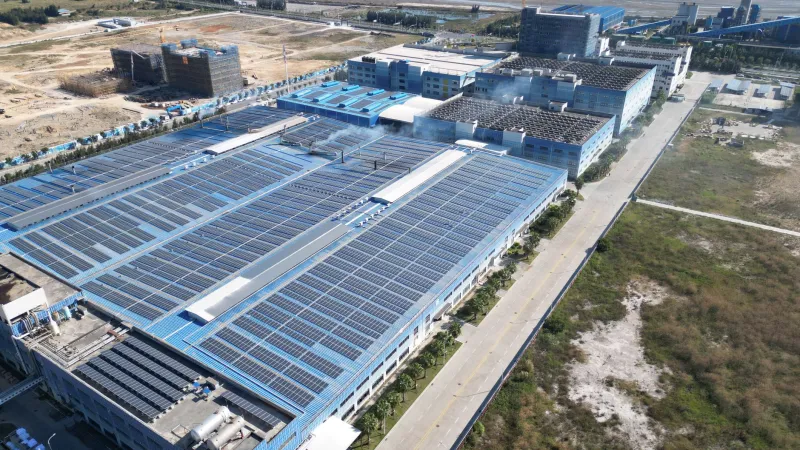
On-site generation — whether solar, combined heat and power (CHP), or other distributed resources — reduces grid dependence structurally, rather than managing it tactically. CHP systems, in particular, are well-suited to industrial applications because they produce both electricity and useful thermal energy from a single fuel input, delivering efficiency gains that are independent of grid pricing dynamics. The economics of CHP are driven primarily by the facility's own energy consumption profile and fuel costs, not by utility rate structures that can change.
Energy storage, when sized and programmed as part of an integrated system rather than as a standalone peak shaving asset, can serve multiple functions: demand charge management, backup power, frequency regulation, and renewable energy time-shifting. A storage system designed with this multi-function architecture delivers more value per dollar of capital investment than one designed for a single use case.
Load flexibility — the ability to shift, curtail, or accelerate energy-intensive processes in response to both price signals and operational conditions — is most valuable when it is managed intelligently through an energy management system that weighs multiple objectives simultaneously. Facilities with sophisticated energy management platforms can optimize load scheduling across cost, carbon intensity, production requirements, and resilience priorities in real time, rather than applying a fixed curtailment protocol whenever demand approaches a threshold.
Reframing the Objective
The shift from reactive peak management to integrated energy strategy requires a change in the fundamental question being asked. The reactive approach asks: how do we minimize our demand charges under the current rate structure? The integrated approach asks: what energy system architecture best serves our operational, financial, and sustainability objectives over the next ten to fifteen years, across a range of possible grid and regulatory environments?
Those are very different questions, and they lead to very different investments.
For industrial facilities operating in a period of genuine energy transition — where grid reliability is under pressure, carbon accountability is increasing, and energy costs remain volatile — the second question is the right one. Peak shaving will likely remain a component of the answer. But it is a component, not a strategy.
The facilities that will hold the competitive advantage in energy over the coming decade are those that recognized this distinction early enough to act on it.