More Solar Is Not Always Better: The Case for Rightsizing Onsite Renewable Energy Investments
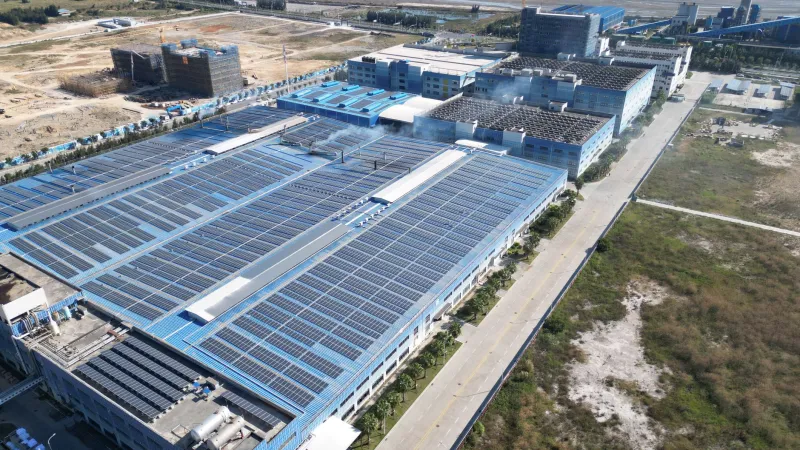
There is a version of the renewable energy narrative that has become almost reflexive in corporate sustainability discussions: more is better. More solar panels on the roof, more battery capacity in the electrical room, more energy generated on-site. The logic feels sound — greater self-sufficiency means lower utility exposure, reduced carbon intensity, and a stronger sustainability story for stakeholders.
The problem is that this narrative, when applied without rigorous financial discipline, has led a meaningful number of industrial and commercial facilities into investments that underperform, tie up capital unnecessarily, and in some cases create operational complications that take years to unwind. The energy independence instinct is understandable. But instinct is not a capital allocation strategy.
The Stranded Asset Problem Nobody Talks About
When a solar array generates more electricity than a facility can consume — and the economics of exporting that surplus to the grid are unfavorable — the excess generation capacity becomes, in practical terms, a stranded asset. The capital invested in those additional panels is not earning a return. It is sitting on the roof.
This scenario is more common than it might appear. Net metering policies, which have historically allowed commercial customers to export surplus solar generation at or near retail rates, have been substantially revised downward in several major US states over the past several years. California's net metering 3.0 framework, which took effect in 2023, dramatically reduced the compensation rate for exported solar energy for new installations. Similar policy trajectories are visible in states including Arizona, Nevada, and Hawaii.
For a facility that sized its solar system based on net metering assumptions that no longer apply, the financial model has changed materially. The panels generating electricity beyond on-site consumption are now compensated at a fraction of their original projected value. The internal rate of return on the overall system declines accordingly — sometimes to the point where the investment no longer clears the organization's cost-of-capital threshold.
Grid Interconnection: The Friction Point Developers Underemphasize
Oversized onsite generation creates a second category of complication that is rarely foregrounded in sales conversations: grid interconnection complexity. Utilities are required to study the impact of distributed generation on their distribution systems, and larger systems trigger more extensive — and more expensive — interconnection studies.
For industrial facilities pursuing systems above certain capacity thresholds, the interconnection process can extend timelines by 12 to 24 months and introduce upgrade requirements — transformer replacements, protection equipment, line reinforcements — that add hundreds of thousands of dollars in costs that the facility is typically required to bear. These are not hypothetical risks. They are documented outcomes that have surprised facility owners who proceeded with aggressive solar sizing without adequately modeling the interconnection pathway.
The practical implication is that right-sizing a solar system to match actual on-site consumption — rather than maximizing nameplate capacity — often results in a faster, simpler, and less costly interconnection process, compressing the timeline to operational status and improving the overall return profile.
Battery Storage: When the Arbitrage Math Does Not Close
Battery energy storage has genuine value in specific applications: demand charge management, backup power, and TOU rate arbitrage where the spread between peak and off-peak pricing is sufficiently large. However, the financial case for battery storage is highly sensitive to the specific rate structure a facility is on, the actual magnitude of its demand charge exposure, and the degree to which storage can reliably suppress peak demand events.
Facilities that install battery systems primarily as a complement to oversized solar — rather than as a response to a clearly defined cost problem — frequently find that the storage investment does not deliver the projected savings. A battery sized to absorb surplus solar generation that cannot be economically exported is not performing a financially productive function. It is solving a problem that a more carefully sized solar array would not have created in the first place.
The compounding effect is significant. An oversized solar array paired with an oversized battery system can represent a capital commitment of several million dollars for a mid-sized industrial facility. If that capital had instead been directed toward proven efficiency measures — motor replacements, compressed air system optimization, HVAC upgrades, lighting retrofits — the return on investment would, in many cases, have been substantially higher and realized in a shorter timeframe.
A Framework for Disciplined Renewable Sizing
The alternative to instinct-driven sizing is a structured analytical process that grounds the renewable investment decision in the facility's actual load profile, the current and projected regulatory environment for distributed generation in its utility territory, and a rigorous comparison of renewable investment returns against competing capital uses.
Several principles are worth establishing at the outset of any onsite renewable evaluation.
Match generation to consumption. The primary design target for an onsite solar system should be to offset on-site load, not to maximize generation. A detailed analysis of 12-month interval consumption data, combined with realistic solar production modeling, should define the system size that achieves the highest utilization of generated energy.
Evaluate the interconnection pathway before committing to a size. Engaging the utility in a preliminary interconnection discussion — or commissioning a pre-application study — before finalizing system design can surface potential cost and timeline issues that affect the investment case.
Stress-test the financial model against policy scenarios. Net metering and interconnection rules are subject to change. A conservative financial model should account for the possibility that export compensation rates decline over the system's 25-year life.
Compare renewable returns against the full menu of energy investment options. A solar system that delivers a 7 percent IRR over 20 years may be a sound investment in isolation. But if efficiency upgrades available at the same facility would deliver 18 to 25 percent IRR over 3 to 5 years, the capital allocation question deserves careful consideration.
The Sustainability Case for Discipline
It is worth addressing the sustainability dimension directly, because some organizations treat the financial and environmental objectives of renewable investment as separate considerations. They are not.
A facility that overbuilds renewable capacity, ties up capital in underperforming assets, and delays or forgoes efficiency investments that would have delivered greater absolute emissions reductions has not optimized its sustainability outcome. It has optimized its optics. The most defensible sustainability strategy is one that achieves the greatest reduction in energy consumption and carbon intensity per dollar of capital deployed — and that standard favors discipline over scale.
Energy independence is a legitimate and valuable organizational objective. Achieving it wisely — at the right size, at the right time, with the right financial foundation — is what transforms that objective from an aspiration into a competitive asset.