Energy Autonomy Is No Longer Optional — It Is the Industrial Competitive Frontier
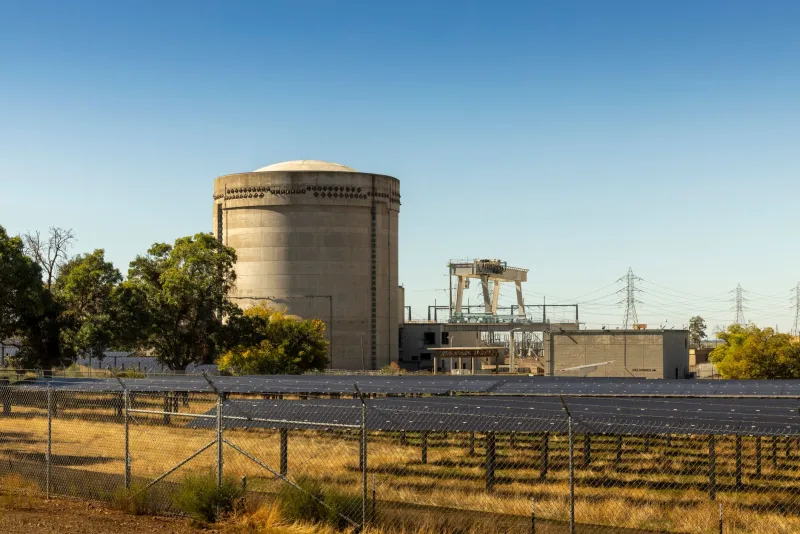
For most of the past century, industrial energy strategy in the United States followed a straightforward logic: negotiate the best available rate from the local utility, manage consumption efficiently, and treat the grid as a reliable, essentially permanent infrastructure given. Energy was an input to be optimized, not a capability to be built.
That logic has not merely been challenged in recent years — it has been structurally undermined. The convergence of grid reliability concerns, commodity price volatility, accelerating decarbonization mandates, and a fundamental reshaping of investor expectations has placed energy autonomy at the center of industrial strategy in a way that would have seemed improbable a decade ago.
The companies moving most decisively in this direction are not doing so out of idealism. They are responding to a competitive environment in which the ability to generate, store, and manage energy independently has become a source of durable operational and strategic advantage.
The Grid Is No Longer the Reliable Foundation It Once Was
The assumption of grid reliability — so foundational to traditional industrial energy planning — has been tested repeatedly and visibly in recent years. The February 2021 winter storm that caused the Texas grid to shed more than 30 gigawatts of generating capacity, leaving millions of residents and hundreds of industrial facilities without power for days, was perhaps the most dramatic illustration of a broader vulnerability.
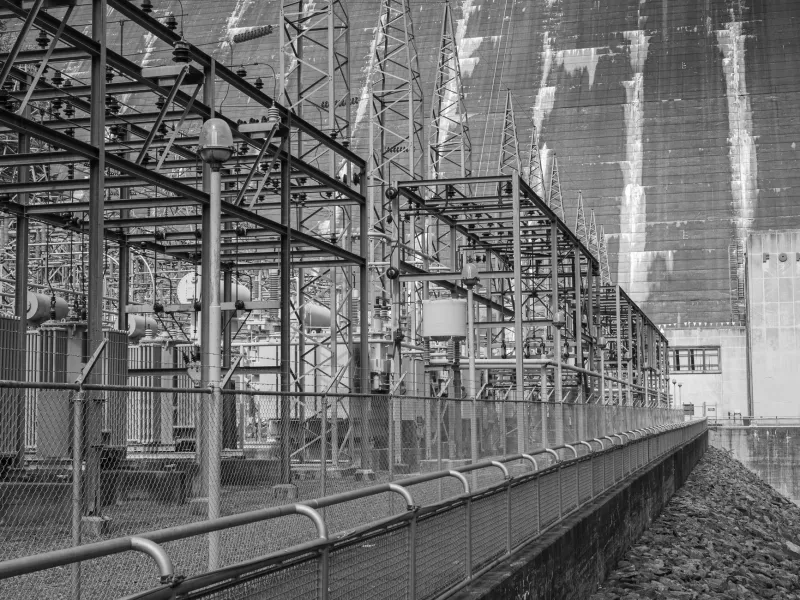
But Texas was not an isolated case. Extreme weather events, aging transmission infrastructure, and the complex challenges of integrating variable renewable generation into grid operations have contributed to a measurable increase in grid disturbance frequency across the US. According to data from the US Energy Information Administration, the average US electricity customer experienced more than eight hours of power interruptions in 2020 — the highest level recorded in over a decade.
For industrial facilities, unplanned outages carry costs that dwarf the value of the electricity itself. Production losses, equipment damage from abrupt shutdowns, restart costs, and contractual penalties for missed delivery commitments represent the true financial exposure of grid dependence. A single multi-hour outage at a continuous-process manufacturing facility can erase months of energy cost savings.
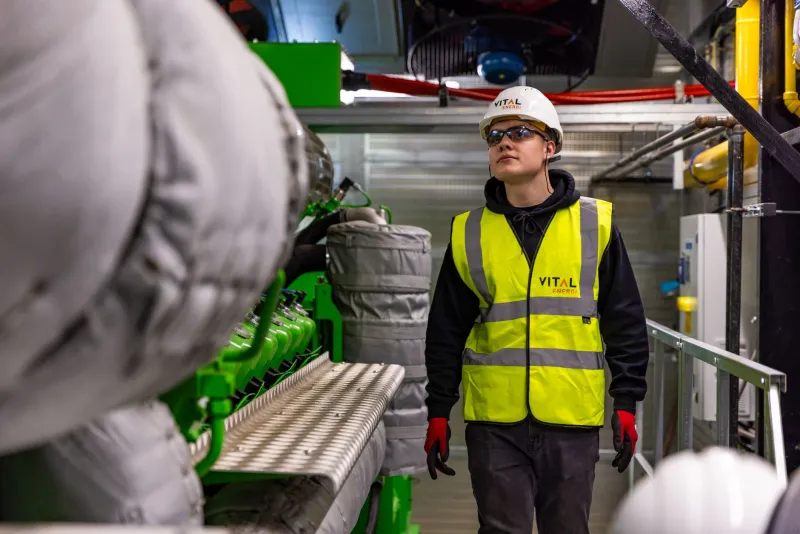
Companies that have invested in on-site generation — solar, combined heat and power, fuel cells — paired with battery energy storage have demonstrated a categorically different resilience profile during these events. They are not immune to grid disturbances, but they are insulated from their most severe operational consequences.
Supply Chain Credibility Begins With Operational Reliability
The post-pandemic restructuring of US industrial supply chains has elevated operational reliability as a vendor qualification criterion in ways that procurement teams are only beginning to formalize. Large manufacturers and original equipment producers, burned by the cascading disruptions of 2020 through 2022, are conducting far more rigorous assessments of their suppliers' operational resilience — including their energy infrastructure.
A supplier that can demonstrate energy independence — the ability to maintain production through grid outages, demand events, or energy price spikes — presents a materially lower supply chain risk profile than one that is fully grid-dependent. This distinction is beginning to appear in supplier audits, qualification questionnaires, and in some cases, contractual requirements from major industrial purchasers.
The implication is significant: energy autonomy is no longer solely an internal cost management decision. It is increasingly a factor in whether a company wins or retains supply chain relationships with major industrial customers. The competitive advantage, in other words, extends upstream and downstream from the facility itself.
The Regulatory Landscape Is Accelerating the Transition
Federal and state regulatory frameworks are moving in a direction that rewards early investment in energy independence and imposes increasing costs on continued fossil fuel dependence. The Inflation Reduction Act of 2022 extended and expanded investment tax credits for solar, wind, battery storage, fuel cells, and combined heat and power systems — creating a financial incentive structure that meaningfully improves the economics of on-site energy investment for industrial facilities.
Beyond direct incentives, the regulatory trajectory on carbon disclosure and emissions reporting is hardening. The Securities and Exchange Commission's climate disclosure rule, alongside state-level requirements in California and an expanding cohort of other jurisdictions, is moving Scope 1 and Scope 2 emissions reporting from voluntary best practice to mandatory compliance for a growing segment of US industrial companies.
Companies that have already reduced their grid electricity consumption through on-site renewable generation are positioned advantageously in this regulatory environment — not only because their reported emissions are lower, but because they have already built the metering infrastructure, operational documentation, and internal expertise required to support credible emissions reporting.
Those that delay face a compounding challenge: they will need to invest in emissions reduction and reporting infrastructure simultaneously, under greater regulatory pressure and with less time to optimize their approach.
Investor Confidence and the Energy Infrastructure Signal
The investment community's attention to industrial energy strategy has intensified considerably in the post-pandemic period. Environmental, social, and governance frameworks — once peripheral to mainstream industrial investment analysis — are now integrated into due diligence processes at institutional investors managing trillions of dollars in assets.
Within the ESG assessment framework, energy autonomy and decarbonization investments send a signal that resonates well beyond the sustainability section of an annual report. They communicate operational sophistication, long-term planning discipline, and a management team that understands the structural risks embedded in conventional energy dependence.
Private equity and strategic acquirers conducting industrial sector due diligence are increasingly incorporating energy infrastructure assessments into their valuation models. A facility with owned renewable generation assets and storage capacity carries a different risk-adjusted valuation than a comparable facility fully exposed to utility rate volatility and grid reliability risk. The energy infrastructure, in this framing, is not a cost center — it is a balance sheet asset with a quantifiable contribution to enterprise value.
The Strategic Case, Clearly Stated
The argument for industrial energy independence does not rest on any single pillar. It is the convergence of multiple reinforcing dynamics — operational resilience, supply chain positioning, regulatory compliance, and investor confidence — that makes the case so compelling and so durable.
Companies that frame on-site energy investment as a cost reduction measure are capturing only a portion of its strategic value. The fuller picture is one in which energy autonomy becomes a defining characteristic of industrial competitiveness: a capability that differentiates reliable suppliers from vulnerable ones, compliant operators from exposed ones, and attractive investment targets from risky ones.
The transition will not happen uniformly or instantaneously. But the direction is clear, and the window for first-mover advantage is finite. The industrial companies making substantive investments in energy independence today are not simply reducing their utility bills — they are positioning themselves at the frontier of what competitive US industry will look like in the decade ahead.
At Changfeng Energy, we work alongside US industrial clients to develop and implement energy independence strategies that are grounded in operational reality and aligned with long-term business objectives. The question is no longer whether energy autonomy matters — it is how quickly your organization can begin building it.