Fugitive Methane: The Emissions Liability Hiding in Plain Sight at Your Facility
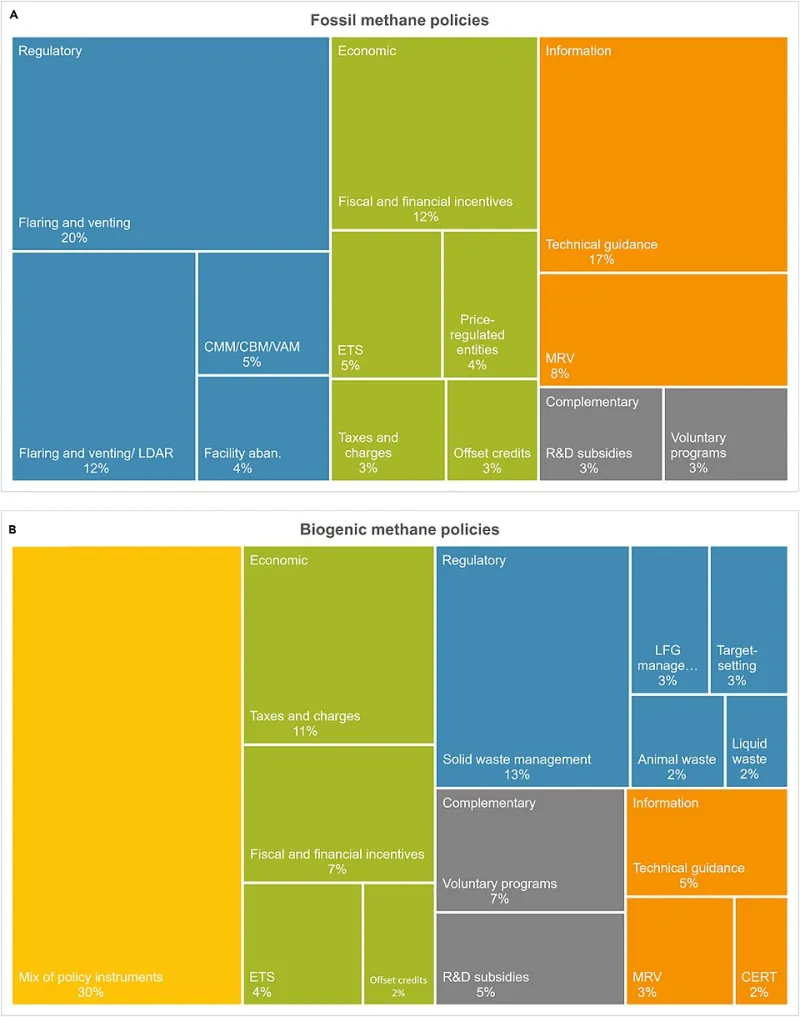
Photo: Authors of the study: Maria Olczak, Andris Piebalgs, Paul Balcombe, CC BY 4.0, via Wikimedia Commons
When industrial facilities conduct energy audits, the conversation almost always gravitates toward the familiar: electricity demand charges, compressed air inefficiencies, motor upgrades, lighting retrofits. These are legitimate priorities, and the savings potential is well-documented. But there is a category of emissions and operational loss that rarely enters the room — one that is simultaneously a sustainability liability, a regulatory exposure, and a squandered revenue opportunity.
Fugitive methane emissions are that category.
For manufacturers operating natural gas-fired equipment, processing facilities, food and beverage plants, chemical manufacturers, and a broad range of other industrial operations across the United States, methane leaks from valves, flanges, seals, compressors, and storage infrastructure represent losses that compound quietly over months and years. Most facilities have no reliable baseline for how much methane is escaping, no systematic detection protocol, and no plan to monetize what can be recovered. That is a problem — and it is becoming an increasingly expensive one.
Why Methane Deserves More Attention Than It Gets
Methane is a potent greenhouse gas. Over a 20-year period, its global warming potential is more than 80 times that of carbon dioxide. This distinction matters not only for sustainability reporting purposes, but also because regulatory frameworks in the United States are moving with increasing urgency in this direction.
The Environmental Protection Agency's updated methane rules under the Clean Air Act, along with state-level requirements in California, Colorado, and other manufacturing-heavy states, are tightening disclosure and reduction mandates. Facilities that have not yet established methane monitoring programs are not simply behind on best practices — they are accumulating regulatory risk.
Beyond compliance, there is a straightforward financial argument. Methane that escapes through a faulty seal or an aging compressor rod packing is natural gas that a facility paid for and never used. In industrial settings where natural gas is consumed at scale, even a modest leak rate translates to thousands of dollars in annual losses. For larger operations, the figure can be substantially higher.
The Detection Gap
One reason fugitive methane has remained a blind spot for so many facilities is that traditional inspection methods are inadequate to the scale of the problem. Walk-around inspections using handheld detectors can identify major leaks but miss the diffuse, low-level emissions that collectively account for a significant share of total methane loss.
The industry has responded with more capable technology. Optical gas imaging cameras allow technicians to visualize methane plumes invisible to the naked eye, enabling faster and more comprehensive surveys across large equipment inventories. Drone-mounted sensors are now being deployed at facilities with complex layouts or difficult-to-access infrastructure, dramatically reducing survey time and improving coverage.
Perhaps most consequentially, continuous monitoring systems using fixed sensors networked across a facility are beginning to give plant operators real-time visibility into emission events rather than periodic snapshots. This shift from episodic detection to ongoing monitoring fundamentally changes the economics of methane management — and the quality of data available for both internal decision-making and external reporting.
Turning a Liability Into a Resource
Detection is only the first step. What distinguishes the facilities realizing genuine competitive advantage is what they do with the methane they identify and capture.
For operations generating organic waste streams — food processors, agricultural facilities, wastewater treatment plants — anaerobic digestion systems can convert methane-producing waste into biogas suitable for electricity generation, heating, or injection into the natural gas grid as renewable natural gas (RNG). The RNG market in the United States has expanded considerably in recent years, driven by state renewable portfolio standards and federal incentives including the Renewable Fuel Standard. Facilities that establish RNG production capacity are not merely reducing emissions — they are creating a new revenue line.
For industrial operations where methane is captured from process leaks or flared gas, thermal oxidizers and small-scale power generation units can convert what was previously wasted into usable energy on site. The economics of these systems have improved substantially as equipment costs have declined and energy prices have remained volatile.
Methane in the Sustainability Reporting Context
For manufacturers engaged in Scope 1 emissions reporting under frameworks such as the Greenhouse Gas Protocol or preparing for compliance with the Securities and Exchange Commission's climate disclosure rules, methane accounting is not optional. Scope 1 emissions encompass direct emissions from owned or controlled sources — and fugitive methane is squarely within that boundary.
Facilities that have not quantified their methane emissions are reporting incomplete data. As investors, customers, and regulators apply greater scrutiny to corporate sustainability claims, incomplete Scope 1 reporting is an increasing credibility risk. Establishing a rigorous methane monitoring and reduction program strengthens the integrity of sustainability disclosures and demonstrates the kind of operational discipline that stakeholders increasingly reward.
Building a Methane Management Protocol
For facilities ready to address this gap, a structured approach is more effective than ad hoc action. The process typically begins with a comprehensive leak detection and repair (LDAR) survey to establish a baseline — identifying both the locations and the magnitude of current emissions. From that baseline, facilities can prioritize repairs by economic and environmental impact, targeting the highest-value leaks first.
Once immediate repairs are addressed, the focus shifts to program design: establishing inspection frequencies, defining repair timelines, selecting monitoring technologies appropriate to the facility's scale and complexity, and integrating methane data into the broader energy management information system.
For facilities with methane generation potential — whether from process waste, biogas, or captured flare gas — the economics of conversion technologies should be evaluated as part of the same strategic process. In many cases, the capital investment required is recoverable within a timeframe that compares favorably with other energy efficiency projects.
The Competitive Dimension
It is worth stepping back and considering what a well-executed methane management program actually signals about a facility's operational maturity. It demonstrates that leadership is willing to look beyond the obvious efficiency levers. It reflects a commitment to comprehensive sustainability performance rather than selective reporting. And it positions the facility to respond to tightening regulations from a position of readiness rather than reactive compliance.
For manufacturers competing in markets where customers, investors, and partners are scrutinizing environmental performance with growing seriousness, that kind of positioning carries real value. The methane opportunity is not a niche concern for specialized industries — it is a broadly applicable, financially meaningful, and strategically significant dimension of industrial energy management that most facilities have yet to fully address.
The question is not whether methane management will become a standard expectation. It will. The question is whether your facility leads that transition or follows it.