The Renewable Energy Transition Isn't Always What Facilities Expected—Here's Why
The case for industrial renewable energy adoption has never been stronger on paper. Federal incentives under the Inflation Reduction Act, declining technology costs, and mounting pressure from customers and investors have pushed renewable energy from a sustainability aspiration to a business imperative for many US manufacturers. Yet the gap between the decision to transition and a successful implementation remains wide—and expensive.
This is not an argument against renewable energy. It is an honest assessment of where industrial facilities consistently go wrong, offered in the interest of helping those that are genuinely ready to make the transition do so effectively.
Mistake 1: Treating the Utility Interconnection as a Formality
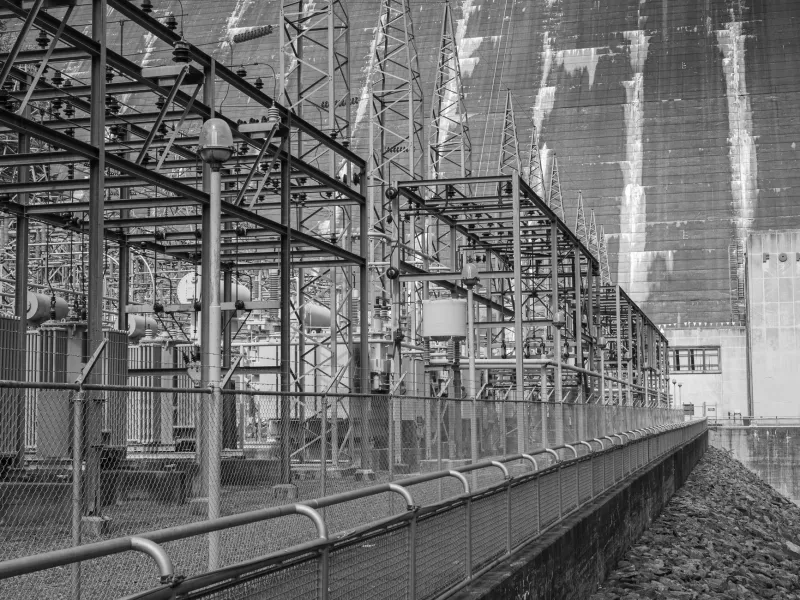
For facilities pursuing on-site solar generation, battery storage, or combined heat and power systems, the utility interconnection process is frequently the point at which well-laid plans first encounter serious friction.
Interconnection requirements vary significantly by utility territory and state regulatory framework. In some jurisdictions, the process is relatively streamlined. In others—particularly in regions served by older grid infrastructure—interconnection studies can take 12 to 24 months, require costly grid upgrades that fall to the applicant, and result in capacity limitations that substantially reduce the value of the installed system.
Facilities that begin procurement, sign contracts with installers, or announce sustainability milestones before completing preliminary interconnection assessments frequently find themselves in a difficult position: committed to a project whose economics have shifted materially because of grid constraints they did not anticipate.
The practical corrective is to initiate interconnection discussions with the serving utility at the earliest stage of project development—ideally before any vendor selection—and to treat interconnection approval as a go/no-go decision point rather than a parallel workstream.
Mistake 2: Underestimating Load Complexity
Residential solar installations are relatively simple to size because household loads are modest and reasonably predictable. Industrial facilities are neither.
Heavy manufacturing operations typically carry large motor loads, process heating demands, and compressed air systems whose energy consumption varies considerably with production schedules. Facilities that size renewable generation assets against average load rather than against the actual load profile—accounting for peak demands, shift patterns, and seasonal variation—often discover that their systems underperform against projections or create grid interaction complications during periods of low production and high generation.
A thorough interval data analysis, ideally covering at least 12 months of 15-minute demand data, is the foundation of any credible renewable system sizing exercise. Skipping or shortcutting this step is among the most common and consequential errors in industrial renewable project development.
Mistake 3: Ignoring Maintenance Obligations in the Financial Model
The financial models that support renewable energy investment decisions at industrial facilities frequently treat maintenance as a minor line item. For utility-scale solar arrays, that assumption may be defensible. For industrial facilities operating complex systems in demanding environments, it often is not.
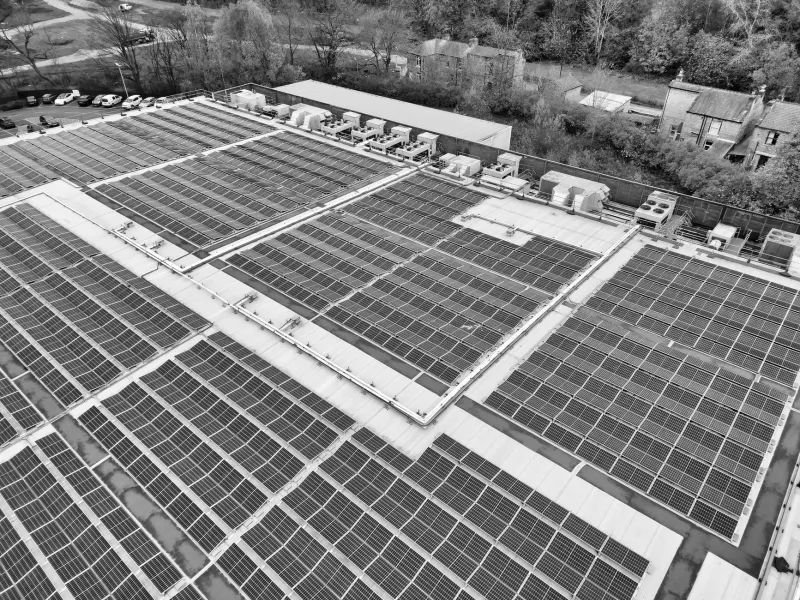
Rooftop solar installations at manufacturing facilities are exposed to particulate contamination, mechanical vibration, and thermal cycling that can accelerate degradation beyond what standard warranty assumptions anticipate. Battery storage systems require active thermal management, periodic cell balancing, and eventual replacement of degraded modules—costs that are sometimes underrepresented in vendor-provided financial projections.
More significantly, facilities that install renewable systems without establishing clear internal accountability for ongoing maintenance often find that performance monitoring falls through the operational cracks. A solar array that is generating at 80 percent of design capacity due to soiling or inverter issues may go undetected for months if no one is specifically tasked with watching the performance data.
Building realistic maintenance cost assumptions into the financial model—and establishing clear operational ownership before commissioning—is not pessimism. It is the diligence that separates successful long-term projects from disappointing ones.
Mistake 4: Pursuing Renewable Energy Before Addressing Baseline Efficiency
There is a sequencing logic to industrial energy improvement that is frequently inverted in practice. Renewable energy is visible, marketable, and increasingly incentivized. Energy efficiency improvements—better insulation, motor upgrades, compressed air leak remediation, lighting retrofits—are less glamorous and harder to communicate to external stakeholders.
As a result, some facilities invest in renewable generation capacity to power loads that could have been substantially reduced through efficiency measures first. The consequence is a larger renewable system than necessary, higher capital expenditure, and a missed opportunity to reduce operating costs through measures that typically offer faster payback than generation assets.
The sequencing principle is straightforward: reduce the load before you invest in generating it renewably. A facility that cuts electricity consumption by 20 percent through efficiency improvements before sizing its solar installation will require a meaningfully smaller system to achieve the same renewable percentage of total consumption—and will have lower energy costs regardless of what happens to generation economics.
Mistake 5: Conflating Renewable Energy Certificates with Actual Decarbonization
Renewable Energy Certificates, or RECs, allow facilities to claim renewable energy consumption without physically receiving electrons from a renewable source. For sustainability reporting purposes, REC purchases are widely accepted as a legitimate accounting mechanism. For facilities that genuinely want to reduce their operational carbon footprint, they are an incomplete solution.
A facility that purchases RECs while continuing to draw power from a coal-heavy regional grid has not changed its physical energy consumption or its actual emissions. It has satisfied a reporting convention. For companies with science-based emissions targets or customers conducting rigorous supply chain emissions assessments, the distinction increasingly matters.
This is not to say that REC purchases have no value—they do support renewable energy development and provide an accessible entry point for facilities not yet positioned for direct renewable procurement or on-site generation. But facilities should be clear-eyed about what RECs accomplish and what they do not, and should develop a roadmap toward more substantive renewable integration if their sustainability commitments require it.
A Candid Assessment
The renewable energy transition is achievable for a wide range of industrial facilities, and the long-term case for pursuing it is compelling. But achieving a genuinely successful transition—one that delivers the projected financial returns, meets sustainability objectives, and does not create operational complications—requires a level of technical rigor and honest self-assessment that the market's promotional enthusiasm sometimes obscures.
At Changfeng Energy, our approach to renewable energy consulting begins with that honesty. Not every facility is ready for every renewable technology today, and acknowledging that is the starting point for building a transition plan that actually works.