Old Equipment, Invisible Emissions: The Carbon Penalty US Manufacturers Are Quietly Paying
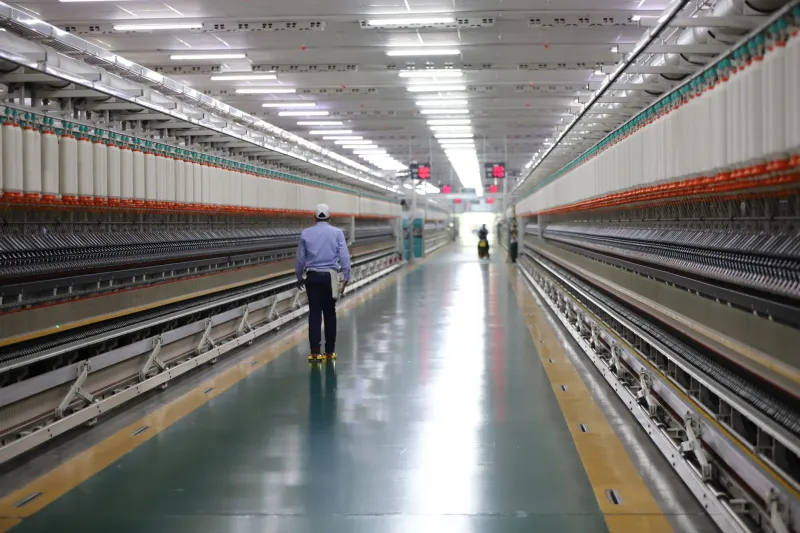
There is a familiar sight on many US plant floors: equipment that has been running for fifteen, twenty, sometimes thirty years. It still functions. It still produces. And precisely because it keeps working, the conversation about replacing it rarely gains urgency. Maintenance crews patch what breaks. Operators work around its limitations. Finance teams defer the capital expenditure to the next budget cycle.
What rarely enters that conversation is what the equipment is costing in carbon — and what that carbon cost is beginning to mean in competitive terms.
The Efficiency Gap No One Is Measuring
Industrial motors, compressors, boilers, HVAC systems, and process equipment all degrade in efficiency over time. Wear, thermal cycling, and outdated control logic cause them to draw more energy than necessary to accomplish the same amount of work. A motor operating at 85 percent of its original efficiency, running continuously across a full production year, can represent a significant and entirely avoidable energy burden.
Multiply that pattern across dozens or hundreds of assets in a single facility, and the cumulative picture becomes substantial. Industry analysts estimate that inefficient industrial equipment accounts for a meaningful share of total US manufacturing energy consumption — and by extension, a significant portion of the sector's direct carbon emissions.
The problem is that this waste tends to be invisible. Unlike a malfunctioning machine that halts production, an inefficient one simply runs — drawing more power, generating more heat, and emitting more carbon than a modern equivalent would. Without granular energy monitoring, that inefficiency never appears on a dashboard. It simply shows up in the utility bill, absorbed as a fixed cost of doing business.
Why This Is a Carbon Problem, Not Just an Operations Problem
For much of the past decade, industrial carbon reduction conversations have centered on renewable energy procurement, on-site generation, and supply chain emissions. These are legitimate and important priorities. But they can obscure a simpler, more immediate lever: consuming less energy in the first place.
Every kilowatt-hour of electricity not consumed is a kilowatt-hour that does not need to be generated — regardless of the fuel source. In states where the grid still carries a significant carbon intensity, reducing consumption has a direct and calculable impact on a facility's Scope 1 and Scope 2 emissions profile. For manufacturers operating under voluntary emissions commitments, customer sustainability requirements, or emerging regulatory frameworks, that reduction translates into measurable progress against stated targets.
Equipment modernization, in this context, is not a capital expense with a sustainability footnote. It is a carbon reduction strategy with a financial return.
The Business Case for Incremental Modernization
One of the most persistent barriers to equipment upgrades is the assumption that modernization requires wholesale replacement — a capital outlay that disrupts operations and demands years of payback. In practice, the most effective approaches are frequently incremental and targeted.
Variable frequency drives (VFDs), for example, can be retrofitted to existing motor systems at a fraction of the cost of full replacement. By allowing motors to operate at speeds matched to actual demand rather than running at full capacity continuously, VFDs routinely deliver energy reductions of 20 to 50 percent on applicable systems. The payback period for well-selected VFD installations is often measured in months, not years.
Similarly, upgrades to compressed air systems — one of the most energy-intensive utilities in manufacturing — can address leakage, pressure optimization, and control sequencing without requiring new capital equipment across the board. Boiler efficiency improvements through economizer additions, combustion tuning, and advanced controls represent another category where targeted investment yields disproportionate returns.
The key is prioritization. Not every piece of aging equipment warrants immediate replacement. A structured energy audit identifies which assets are consuming the most energy relative to their productive output, which are operating furthest from their design efficiency, and which upgrades carry the strongest combined case on financial and emissions grounds.
Carbon Consciousness Is Reshaping Procurement Decisions
US manufacturers are increasingly encountering carbon expectations from outside their own operations. Large enterprise customers — particularly those with public net-zero commitments — are beginning to examine the emissions profiles of their suppliers. Federal procurement programs are incorporating carbon criteria. Export markets, especially in Europe, are moving toward mechanisms that assign explicit cost to embedded carbon in imported goods.
This shift is not hypothetical. It is already influencing sourcing decisions, contract terms, and supplier qualification processes in sectors ranging from automotive and aerospace to consumer goods and construction materials.
A manufacturing facility that has systematically reduced its energy intensity through equipment modernization is better positioned to respond to these expectations than one that has not. The carbon data is real, auditable, and attributable to specific operational decisions — not purchased offsets or accounting adjustments. That distinction carries weight with sophisticated buyers and sustainability-conscious procurement teams.
Modernization as a Long-Term Competitive Posture
There is a tendency to frame equipment investment as a cost center — something that erodes margin rather than builds it. The more accurate framing, particularly in a period of elevated energy costs and increasing carbon scrutiny, is that aging equipment is the cost center. It is the source of avoidable expense, unnecessary emissions, and growing competitive exposure.
Facilities that treat equipment modernization as a strategic priority rather than a reactive maintenance function are building something more durable than short-term savings. They are building an operational foundation that is more energy-efficient, more carbon-defensible, and more adaptable to a market environment that is placing increasing value on both.
The carbon cost of aging industrial equipment is real. It is measurable. And unlike many other dimensions of the sustainability challenge, it is directly within the control of facility operators and leadership teams. The question is not whether addressing it is worthwhile — the evidence on that point is clear. The question is whether the urgency of the opportunity is being recognized before the competitive and regulatory landscape makes the decision less optional.
At Changfeng Energy, we work with industrial and commercial clients across the US to identify where aging systems are creating the greatest energy and carbon exposure — and to build modernization roadmaps that deliver measurable returns on both fronts. The efficiency gap in your facility is not a fixed condition. It is a solvable problem.