The Motor Efficiency Gap: Why the Biggest Cost Reduction Opportunity on Your Plant Floor Is Already Running
The Machine Nobody Watches
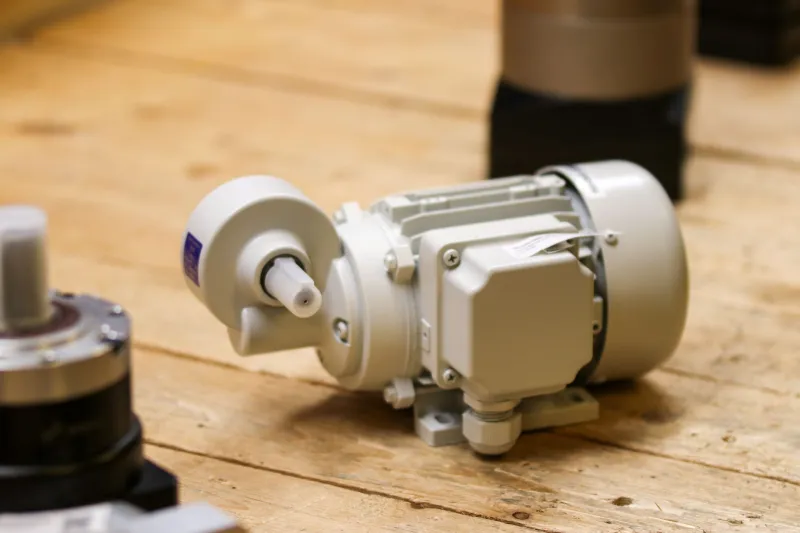
There is a particular irony embedded in most industrial facilities: the equipment that consumes the most energy is rarely the equipment that receives the most attention. Compressed air systems, lighting retrofits, and HVAC upgrades tend to generate internal enthusiasm because their inefficiencies are visible and their upgrades are tangible. Electric motors, by contrast, do their work quietly, reliably, and at enormous cost.
The U.S. Department of Energy estimates that electric motor-driven systems account for roughly 40 to 50 percent of all electricity consumed in the industrial sector. In a mid-sized manufacturing plant spending $2 million annually on electricity, that figure translates to somewhere between $800,000 and $1 million flowing directly through motor systems every year. Yet when facility managers are asked to rank their energy priorities, motor efficiency rarely surfaces near the top of the list.
The reasons for this are understandable, if not defensible. Motors are durable. A well-maintained motor can run for 20 years or more, and longevity is often mistaken for efficiency. The fact that a motor is still running does not mean it is running well—and in an era of tightening industrial margins, the difference between those two conditions carries significant financial weight.
What Aging Motors Are Actually Costing You
Consider a standard 100-horsepower induction motor installed in 2004 under the pre-EISA efficiency standards that governed the market at the time. That motor likely operates at an efficiency rating somewhere between 93 and 94 percent. A comparable NEMA Premium Efficiency motor installed today would operate at 95 percent or above—a difference that sounds trivial until the math is applied.
At an average industrial electricity rate of $0.08 per kilowatt-hour and 8,000 operating hours per year, a two-percentage-point efficiency improvement on a single 100-horsepower motor yields approximately $950 in annual savings. Across a facility operating 50 such motors, that figure reaches $47,500 per year. Across a portfolio of plants, the cumulative opportunity becomes material enough to influence earnings.
The calculation shifts even more dramatically when variable frequency drives (VFDs) enter the equation. Many industrial motors operate at fixed speeds to serve loads that are inherently variable—pumps, fans, and compressors being the most common examples. A pump running at full speed when only 70 percent of its capacity is required is not just wasteful; it is operating in direct violation of the affinity laws that govern fluid dynamics. According to those laws, reducing motor speed by 20 percent reduces power consumption by approximately 49 percent. Installing a VFD on an existing motor, even one that is otherwise efficient, can generate energy savings of 20 to 50 percent on qualifying applications.
Why the Business Case Gets Buried
If the numbers are this compelling, why do motor upgrades so frequently lose out to other capital priorities? Several structural factors are at work.
First, motor replacements are often reactive rather than planned. When a motor fails, the instinct is to replace it with the nearest available equivalent—not to conduct a system-level efficiency analysis. Procurement teams operating under production pressure are not positioned to optimize for lifecycle cost. They are positioned to restore uptime, and speed almost always wins.
Second, the efficiency gap between an aging motor and a premium replacement is rarely visible in operational dashboards. Unlike a compressed air leak that can be detected with an ultrasonic probe, or a lighting circuit that can be metered in isolation, motor inefficiency is diffuse. It hides inside aggregate electricity bills and is rarely attributed to a specific asset.
Third, capital planning cycles tend to favor projects with clear project boundaries and short payback periods. Motor upgrades, particularly when approached system by system rather than asset by asset, can require upfront analysis that stretches the perceived complexity of the project beyond what internal teams have bandwidth to manage.
A Structured Pathway to Motor System Modernization
The solution is not simply to replace every aging motor on the floor. A disciplined approach begins with a motor system audit—a systematic inventory that maps each motor asset against its nameplate rating, estimated operating hours, load profile, and current efficiency classification. This baseline reveals which motors are candidates for immediate replacement, which are appropriate for VFD installation, and which are operating efficiently enough to defer action.
From that inventory, a prioritized upgrade schedule can be built around three tiers:
Tier One — Opportunity-driven replacement: Motors that fail during the planning period should be replaced exclusively with NEMA Premium Efficiency units. This policy costs almost nothing to implement and ensures that the fleet does not continue to accumulate inefficiency through routine maintenance cycles.
Tier Two — VFD installation on variable-load applications: Pumps, fans, and compressors operating at fixed speeds against variable demand profiles are high-priority candidates. Payback periods on VFD installations in these applications routinely fall between 12 and 36 months, and many utilities offer rebate programs that compress that timeline further.
Tier Three — Proactive replacement of high-hours, high-load motors: Motors running near continuous duty cycles at significant horsepower ratings carry the largest efficiency penalty per dollar of electricity consumed. Replacing these assets before failure—rather than waiting for an unplanned outage—also reduces production risk and maintenance labor costs.
The Margin Argument That Extends Beyond Energy
Energy cost reduction is the most straightforward argument for motor modernization, but it is not the only one. Premium efficiency motors and properly configured drive systems generate less heat, which reduces thermal stress on motor windings and extends equipment life. Lower operating temperatures also reduce cooling loads in motor control rooms, producing secondary energy savings. VFD-equipped systems apply softer starting profiles that reduce mechanical stress on couplings, belts, and driven equipment—a factor that directly affects maintenance frequency and unplanned downtime.
For manufacturers operating in sectors where carbon disclosure is becoming a commercial expectation—whether through customer supply chain requirements or voluntary sustainability commitments—motor efficiency improvements represent one of the most straightforward paths to reducing Scope 2 emissions. Unlike renewable energy procurement, which involves contract negotiation and market timing, motor upgrades are entirely within a facility's operational control.
Closing the Gap
The motor efficiency gap is not a new discovery. It has been documented by the Department of Energy, analyzed by efficiency program administrators, and quantified by engineering consultants for decades. What has changed is the competitive context surrounding it.
In an industrial environment where energy costs are volatile, margins are compressed, and sustainability performance is increasingly scrutinized, leaving 40 to 50 percent of your electricity spend on autopilot is no longer a defensible position. The motors on your plant floor are already running. The question is whether they are working as hard for your bottom line as they could be.