Waste Heat Is Everywhere in Your Plant. So Why Isn't It Paying You Back?
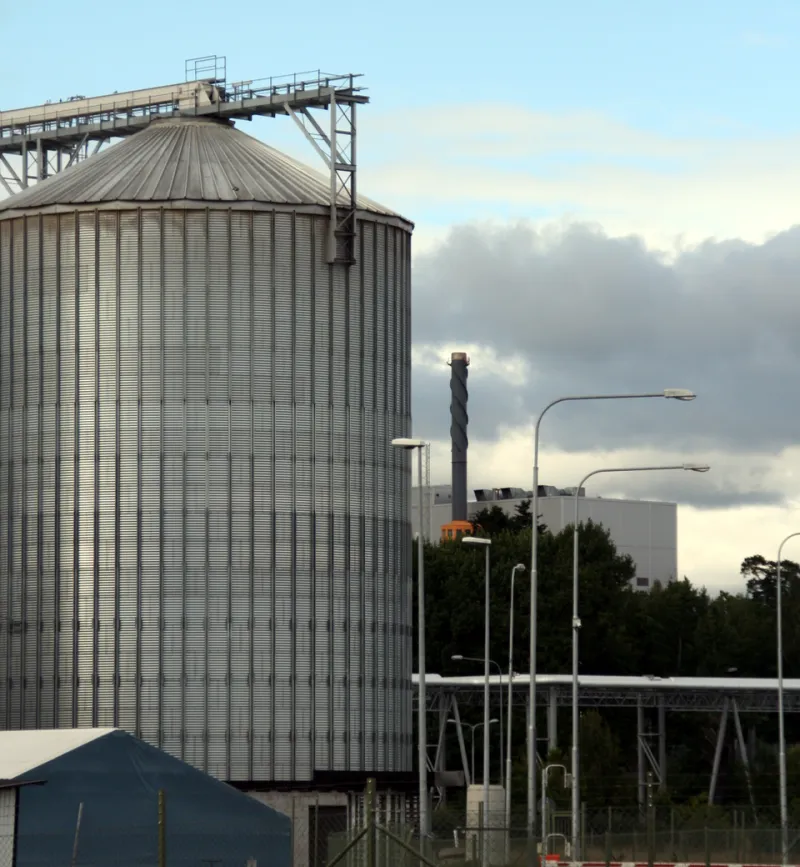
Photo: Mr3641, Public domain, via Wikimedia Commons
Walk through almost any manufacturing facility in the United States and the evidence is unmistakable. Heat shimmers above exhaust stacks. Cooling water carries thermal energy away from processes and dissipates it into the air. Furnaces, kilns, ovens, compressors, and engines all release significant quantities of heat as a byproduct of normal operation. In aggregate, the US Department of Energy has estimated that industrial waste heat represents tens of billions of dollars in annual energy value — most of it simply discarded.
This is not a new observation. Heat recovery has been discussed in industrial energy circles for decades. Engineers understand the thermodynamics. The technology exists. The financial case, at least in broad terms, has long been positive. And yet, facility after facility continues to operate without meaningful heat recovery infrastructure, year after year, absorbing energy costs that could be substantially reduced.
The persistence of this gap deserves a serious examination — not of the theory, but of the practical realities that keep facilities from acting.
Why Implementation Lags So Far Behind Awareness
The most common explanation offered by plant managers and energy directors is capital availability. Heat recovery projects require upfront investment, and in an environment where capital budgets are constrained and competing priorities are plentiful, projects without an immediate operational imperative tend to wait. This is a legitimate constraint, but it is not the whole story.
A second barrier is complexity. Heat recovery is not a plug-and-play solution. Integrating a heat exchanger, economizer, or organic Rankine cycle (ORC) system into an existing process requires engineering analysis, process compatibility assessment, and often modifications to adjacent systems. For facilities without dedicated energy engineering staff, the path from concept to commissioned project can feel prohibitively complicated.
There is also a measurement problem. Many facilities lack the metering infrastructure to accurately quantify how much waste heat they are generating, at what temperatures, and with what consistency. Without that data, it is difficult to build a credible business case — and without a credible business case, projects do not move forward.
Finally, there is the issue of institutional inertia. In facilities where energy has historically been treated as a fixed cost rather than a managed variable, the organizational reflex to invest in heat recovery simply has not developed. Changing that reflex requires both technical argument and cultural shift.
The Temperature Spectrum and Why It Matters
Not all waste heat is equally recoverable, and understanding the temperature profile of a facility's thermal losses is fundamental to identifying viable projects. Industrial waste heat is typically categorized as high-grade (above 1,200°F), medium-grade (450°F to 1,200°F), or low-grade (below 450°F).
High-grade waste heat — generated by glass furnaces, metal smelting operations, cement kilns, and similar high-temperature processes — has historically been the most straightforward to recover, because the temperature differential is large enough to drive steam generation and power production efficiently. Many large industrial facilities in these sectors have implemented heat recovery systems, though even here, significant opportunities remain unrealized.
Medium-grade heat from sources such as exhaust gases from industrial boilers, gas turbines, and large reciprocating engines is well-suited to heat exchangers and economizers that preheat combustion air or process water, reducing fuel consumption. These applications are often highly cost-effective and technically straightforward, yet remain underdeployed across the broader manufacturing base.
Low-grade waste heat — the most abundant and most commonly neglected category — presents a more nuanced opportunity. Temperatures in this range are too low for conventional steam generation but can be utilized for space heating, service water heating, absorption cooling, and, increasingly, through ORC technology, for electricity generation. Advances in ORC system efficiency and reductions in equipment cost are making low-grade heat recovery economically viable for a wider range of facilities than was the case even five years ago.
Modular Solutions Are Changing the Equation
One of the most significant developments in the heat recovery space over the past decade has been the emergence of modular, skid-mounted systems designed specifically for retrofit applications. Traditional heat recovery infrastructure was often engineered from the ground up for new construction, making it difficult and expensive to integrate into existing facilities. Modular systems change that dynamic.
Skid-mounted heat exchangers, compact ORC units, and prefabricated heat recovery steam generators can be installed with significantly less disruption to ongoing operations than custom-engineered alternatives. Installation timelines are shorter, engineering costs are lower, and the systems can often be sized to match available heat streams without requiring major process modifications.
Several US manufacturers have begun offering modular heat recovery systems specifically targeted at mid-sized industrial facilities — a market segment that has historically been underserved by heat recovery technology providers focused on large-scale industrial applications. This broadening of the addressable market is meaningful: it means that the heat recovery opportunity is no longer confined to steel mills and petrochemical complexes.
Financing Models That Remove the Capital Barrier
For facilities where capital availability remains the primary obstacle, alternative financing structures are increasingly available. Energy-as-a-service (EaaS) arrangements, in which a third-party provider installs and owns heat recovery equipment and the facility pays for the energy services delivered, allow organizations to capture efficiency gains without upfront capital expenditure. The provider recovers its investment through a share of the energy savings over the contract term.
Property Assessed Clean Energy (PACE) financing, available in a growing number of US states, allows commercial and industrial property owners to finance energy improvements through a special assessment on their property, repaid over time through property tax payments. For owned facilities, this can be an effective mechanism for funding heat recovery projects that might otherwise be deferred indefinitely.
Utility incentive programs represent another underutilized resource. Many US utilities offer rebates and incentives for heat recovery projects as part of their demand-side management portfolios. These incentives vary considerably by utility and jurisdiction, but in aggregate they can meaningfully improve project payback periods for qualifying installations.
Quantifying What's Actually at Stake
For facilities that have conducted rigorous waste heat assessments, the numbers are often larger than initially expected. A mid-sized food processing plant recovering heat from pasteurization and cooking processes to preheat incoming water can reduce natural gas consumption by 15 to 25 percent in those operations. A metal fabrication facility capturing exhaust heat from annealing furnaces to preheat combustion air can achieve fuel savings of similar magnitude. An industrial laundry operation recovering heat from dryer exhaust can reduce total thermal energy consumption by a substantial fraction.
These are not marginal improvements. In facilities where natural gas and thermal energy represent significant shares of total energy cost, a well-designed heat recovery program can deliver payback periods of two to five years — comparable to or better than many other capital investments competing for the same budget.
Making Heat Recovery a Strategic Priority
The facilities that have moved heat recovery from a theoretical discussion to an operational reality share a common characteristic: they approached it as a strategic energy management initiative rather than a standalone capital project. That means investing in metering and data collection to quantify the opportunity, engaging engineering expertise to evaluate technology options, building a business case that captures both direct energy savings and ancillary benefits such as reduced cooling load and improved process stability, and identifying the financing structure that best fits the organization's capital posture.
Waste heat is not a marginal resource. For most industrial facilities, it represents one of the largest untapped efficiency opportunities on the property. The question worth asking is not whether the opportunity exists — it does — but how much longer your facility can afford to let it walk out the exhaust stack.