Compressed Air: The Silent Budget Leak Draining Industrial Facilities Nationwide
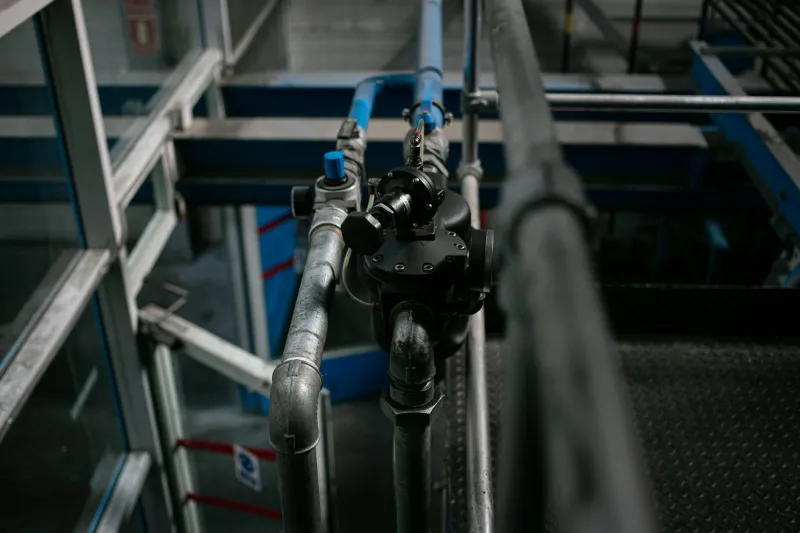
There is a category of energy waste that does not announce itself with a warning light, a failed component, or a spike on an invoice line item. It simply persists—steady, invisible, and expensive. For a significant share of US industrial facilities, that waste is compressed air escaping through leaks that have accumulated over years of deferred maintenance and inadequate monitoring.
Compressed air has long occupied a peculiar position in industrial operations. Engineers and plant managers rely on it constantly—for pneumatic tools, conveyor systems, packaging equipment, process controls, and dozens of other applications—yet it rarely receives the same rigorous financial scrutiny applied to electricity, natural gas, or water. That oversight carries a measurable cost.
Why Compressed Air Deserves the Title of "The Fourth Utility"
Electricity, natural gas, and water are universally recognized as managed utilities within industrial energy programs. Compressed air, despite being generated on-site rather than purchased from a utility provider, warrants the same classification. Producing it is energy-intensive: compressors typically account for anywhere from 20 to 30 percent of a manufacturing facility's total electricity consumption, with energy-heavy industries such as automotive, food processing, and chemical manufacturing often exceeding that range.
The fundamental economics of compressed air production are unforgiving. Generating one unit of compressed air requires approximately seven to eight units of electrical energy, making it one of the least efficient energy conversion processes in standard industrial use. When air escapes through leaks before it ever performs useful work, that entire energy investment is simply lost.
Yet because compressed air is generated internally and does not appear as a discrete line on a utility bill, many facilities have no formal mechanism for tracking how much of it they are actually wasting.
The Scale of the Problem
Industry data consistently indicates that unmanaged compressed air systems lose between 20 and 30 percent of total compressed air output to leaks. In facilities that have never conducted a formal leak detection audit, that figure can climb considerably higher. A plant operating a 200-horsepower compressor system running at full capacity could be losing tens of thousands of dollars annually to air that escapes through fittings, hose connections, valve stems, pipe joints, and thread sealants that have degraded over time.
The financial impact extends beyond the direct energy cost of the escaping air. Leaks reduce system pressure, which forces compressors to cycle more frequently and operate at higher output to maintain adequate pressure across the distribution network. This added mechanical stress accelerates equipment wear, shortens compressor service life, and increases maintenance frequency. In some facilities, the response to persistent pressure drops has been to simply add compressor capacity—an expensive capital solution to a problem that could have been addressed through systematic maintenance at a fraction of the cost.
Why Leaks Go Undetected for So Long
Compressed air leaks are largely inaudible under normal plant operating conditions. The ambient noise of manufacturing equipment—motors, conveyors, presses, HVAC systems—masks the hiss of escaping air that might otherwise be detectable. During production hours, leaks are effectively invisible to routine observation.
Traditional maintenance approaches have also contributed to the problem. Many facilities operate on a reactive maintenance model for compressed air systems, addressing failures when they become operationally disruptive rather than auditing for inefficiencies proactively. Leaks rarely cause immediate production failures; they simply erode efficiency gradually, making them easy to defer.
Organizational structure plays a role as well. Compressed air systems often fall into ambiguous ownership between maintenance, engineering, and operations teams, with no single function clearly accountable for system-wide energy performance.
The Case for Ultrasonic Leak Detection
Modern leak detection programs have largely moved beyond visual inspection and soap-solution testing, both of which are labor-intensive and limited in scope. Ultrasonic leak detectors have become the industry standard for systematic compressed air audits. These instruments identify the high-frequency sound signatures produced by pressurized air escaping through small openings—frequencies that fall well above the range of plant floor noise.
A trained technician equipped with an ultrasonic detector can survey an entire compressed air distribution network methodically, tagging leak locations for repair prioritization. Each identified leak can be quantified in terms of estimated air volume loss and translated directly into annual energy cost. This creates an actionable, prioritized repair list with a defined financial return attached to each item.
For large facilities, leak detection surveys can be segmented by production zone, allowing repairs to be scheduled without disrupting operations. Some facilities integrate periodic ultrasonic audits into their annual maintenance calendars, treating compressed air leak management as an ongoing discipline rather than a one-time remediation project.
Building a Sustainable Leak Management Program
Detecting and repairing existing leaks is only the first phase of a durable compressed air efficiency strategy. Without a structured program to prevent new leaks from accumulating, facilities typically return to pre-audit leak rates within two to three years. A sustainable approach incorporates several additional elements.
First, component standardization matters. Specifying high-quality fittings, couplings, and thread sealants across the compressed air distribution network reduces the frequency at which connections develop leaks under pressure cycling and thermal expansion. Second, operator training ensures that personnel working with pneumatic equipment understand proper connection procedures and recognize the signs of developing leaks. Third, regular re-auditing—typically on an annual or biannual cycle—catches new leaks before they accumulate into significant waste.
Metering compressed air consumption by zone or department provides an additional layer of accountability. When individual production areas have visibility into their compressed air usage, anomalies that may indicate developing leaks become apparent more quickly, and cost responsibility is distributed across the organization rather than absorbed invisibly in aggregate utility expenses.
What Recovery Looks Like in Practice
Facilities that implement comprehensive leak detection and repair programs consistently report energy savings in the range of 20 to 30 percent of compressed air system operating costs. For a mid-sized manufacturing plant spending $300,000 annually to operate its compressed air infrastructure, that represents $60,000 to $90,000 in recoverable costs—often achievable with a program investment that pays back within a single year.
Beyond the direct savings, reduced compressor runtime extends equipment life, lowers maintenance costs, and in many cases defers capital expenditure on compressor capacity additions. Facilities pursuing sustainability goals also benefit from the associated reduction in electricity consumption, which translates directly into lower Scope 2 greenhouse gas emissions.
Treating Compressed Air as a Managed Resource
The industrial facilities that manage energy most effectively share a common discipline: they measure what they consume, account for what they lose, and act systematically on what the data reveals. Compressed air has historically been exempted from that discipline, largely because its costs are embedded rather than invoiced.
That exemption is increasingly difficult to justify. In an operating environment where energy costs remain elevated and efficiency is a competitive differentiator, the unmanaged compressed air system represents an opportunity that is both substantial and accessible. The technology to identify waste is proven, the methodology to eliminate it is well-established, and the financial case is straightforward.
For industrial operators committed to genuine cost control, compressed air deserves a seat at the energy management table—not as a minor maintenance footnote, but as a managed resource with measurable financial accountability.