The Price of Readiness: Quantifying and Controlling the Energy Cost of Standby Operations

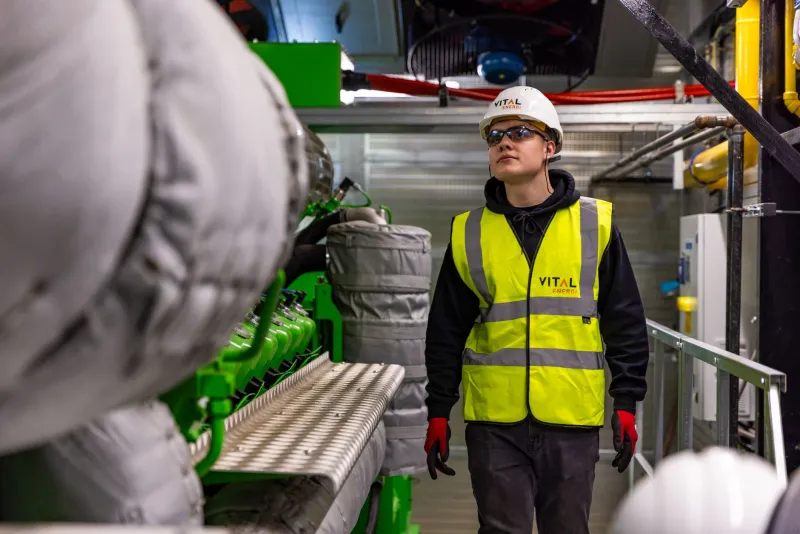
Photo: industrial facility backup systems standby equipment control room, via cdn.britannica.com
Reliability is non-negotiable in industrial operations. A pump that fails during a critical production run, a backup power system that does not respond when the grid goes down, or a redundant cooling circuit that cannot pick up load on demand—these are failures with consequences that extend well beyond the cost of the energy they would have consumed. The case for maintaining standby systems, redundant equipment, and always-on infrastructure is sound.
What is less sound is the assumption that operational resilience must be purchased at maximum energy cost. Most production facilities have never conducted a systematic accounting of what their standby and idle systems actually consume, which means they have never had the opportunity to ask whether that consumption is proportionate to the reliability it delivers. In many cases, it is not.
Defining the Standby Load Landscape
Standby energy consumption in an industrial context encompasses several distinct categories, each with different characteristics and different optimization opportunities.
Redundant mechanical systems represent the most familiar category. Backup pumps, secondary compressors, spare cooling towers, and parallel conveyor drives are maintained in ready states to ensure continuity if primary equipment fails. Depending on how they are managed, these systems may draw meaningful energy simply to remain available—keeping lubricants warm, maintaining pressurization, or cycling periodically to prevent mechanical degradation.
Control and automation infrastructure constitutes a less visible but often substantial standby load. Programmable logic controllers, human-machine interfaces, network switches, server racks, and instrumentation systems typically operate continuously regardless of whether production is active. In facilities with extensive automation, the aggregate draw of control infrastructure during non-production periods can rival or exceed the consumption of some production equipment.
Utility systems maintained at operational readiness include compressed air networks held at pressure, chilled water loops circulating through idle process equipment, steam systems maintaining temperature in distribution piping, and HVAC systems conditioning spaces that are not occupied. These systems often continue operating at near-full capacity during shutdowns, shift changes, and extended breaks because the operational cost of bringing them down and back up is perceived—sometimes incorrectly—as exceeding the energy cost of keeping them running.
Phantom loads from power electronics complete the picture. Uninterruptible power supplies, battery chargers, variable frequency drives in standby mode, and power conditioning equipment all draw continuous baseline current that accumulates across a facility's electrical distribution system.
The Measurement Problem
The reason most facilities have not addressed standby energy costs is straightforward: they have not measured them. In the absence of sub-metering and off-hours monitoring, the energy consumed by idle and standby systems is simply absorbed into the total facility consumption figure, invisible against the larger production baseline.
This invisibility has a cost. Facilities that have deployed monitoring specifically designed to capture non-production consumption consistently find that standby loads account for a meaningful share of total monthly energy expenditure. Industry observations suggest figures ranging from 10 to 30 percent of total consumption attributable to loads that exist outside of active production—a range that translates to tens of thousands of dollars annually for a mid-sized manufacturing operation.
The measurement process itself is not complex. Establishing a monitored baseline during a planned shutdown—a holiday period, a scheduled maintenance window, or a planned production pause—provides a direct view of the facility's true standby consumption profile. Comparing that baseline against sub-metered circuit data identifies which systems are contributing most significantly to off-hours draw.
Optimizing Without Compromising Resilience
The objective of standby energy management is not to reduce reliability—it is to achieve equivalent reliability at lower energy cost. These goals are not in conflict, but realizing both requires moving beyond the default assumption that all standby systems must operate in the same way at all times.
Tiered readiness protocols assign different standby states to different equipment categories based on recovery time requirements. Systems that must respond within seconds require a different readiness posture than systems with a five-minute acceptable recovery window. Formalizing these distinctions allows facilities to reduce energy input to lower-priority standby equipment without compromising the availability of truly time-critical systems.
Intelligent sequencing and rotation addresses redundant equipment by distributing operating hours more deliberately across primary and backup assets. Rather than maintaining a backup pump in continuous warm standby, a rotation schedule that periodically brings the backup unit into active service—while placing the primary unit in a lower-energy standby state—can achieve equivalent mechanical readiness at reduced energy cost. It also distributes wear more evenly, with secondary maintenance benefits.
Utility system scheduling applies to compressed air, steam, and chilled water systems that are routinely maintained at full operational parameters during non-production periods. In many facilities, these systems can be stepped down to reduced-pressure or reduced-temperature hold states during planned idle periods without materially extending restart time. The energy savings from even modest pressure reductions in a compressed air system held at standby for eight to twelve hours per day are significant when calculated on an annual basis.
Control system power management receives less attention than mechanical systems but warrants structured review. Identifying which control and automation components genuinely require continuous power versus which can be safely de-energized or placed in low-power modes during extended shutdowns can yield meaningful reductions in baseline electrical draw without introducing operational risk.
Building the Business Case
For plant managers and energy directors making the case for standby energy optimization to finance and operations leadership, the framing matters. This is not a proposal to reduce reliability or introduce operational risk. It is a proposal to audit the energy cost of current reliability practices, compare that cost against the actual risk profile of the facility, and identify cases where equivalent or superior resilience can be achieved more efficiently.
The business case is strengthened by the fact that standby energy optimization typically requires modest capital investment. The primary inputs are measurement infrastructure, engineering analysis, and operational protocol development—not major equipment replacement. The financial returns, however, are recurring: every dollar of standby energy cost eliminated is a dollar recovered in every subsequent operating year.
Operational resilience is a legitimate and necessary investment for any production facility. The energy cost of maintaining that resilience, however, should be as lean as the operations it protects. Quantifying what readiness actually costs—and optimizing accordingly—is not a compromise. It is sound industrial energy management.